

When AI Gets Market Sizing Wrong: A $33 Billion Reality Check
Artificial intelligence-powered market sizing can misrepresent actual...
Read More
TAM shows market size, but not value. Learn how Total Addressable Profit (TAP) helps companies prioritize higher-margin opportunities and drive better decisions.



They rarely answer the one that matters more: How profitable is it? That gap is where decisions go wrong, and where Strategex introduces Total Addressable Profit (TAP).
TAM-SAM-SOM is a widely used framework for estimating market potential. It helps organizations understand total demand, accessible demand, and realistic share. But it has a critical limitation: It focuses entirely on revenue.
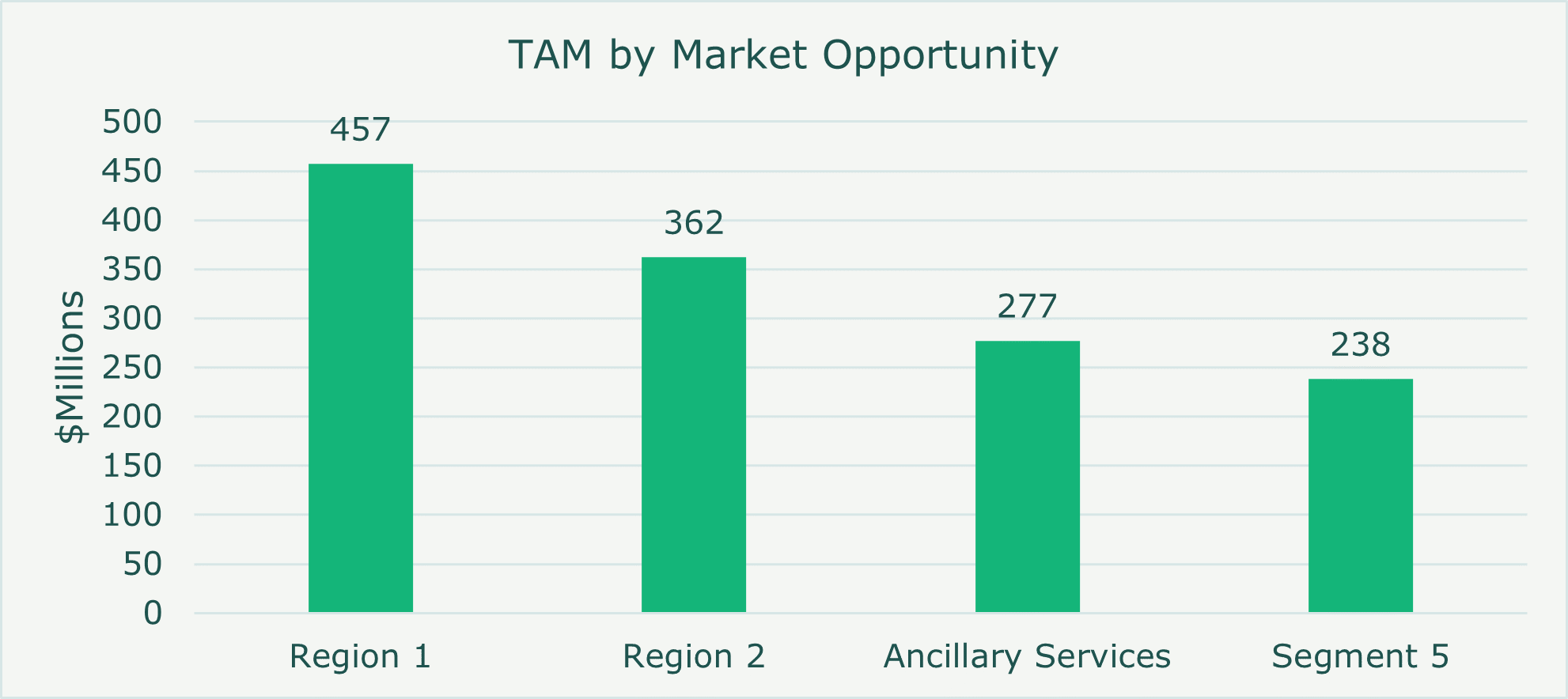
Measures that actually drive business value, profit, margin, and cash flow are not included. As a result, companies can pursue large markets that generate growth but fail to create meaningful value. Revenue alone is not a reliable indicator of opportunity. Profitability is.
Total Addressable Profit (TAP) is a simple extension of traditional market sizing. Instead of focusing only on revenue, TAP estimates the total gross profit available within a market or segment by combining:
This creates a more complete view of opportunity, one that reflects not just scale, but value.
In a recent engagement, a company identified four adjacent growth opportunities:
Initial analysis suggested all four were attractive. Each had a TAM between $238M and $457M, and appeared similar in terms of:
The natural inclination was to pursue the largest opportunity. But there was concern around differentiation and pricing power.
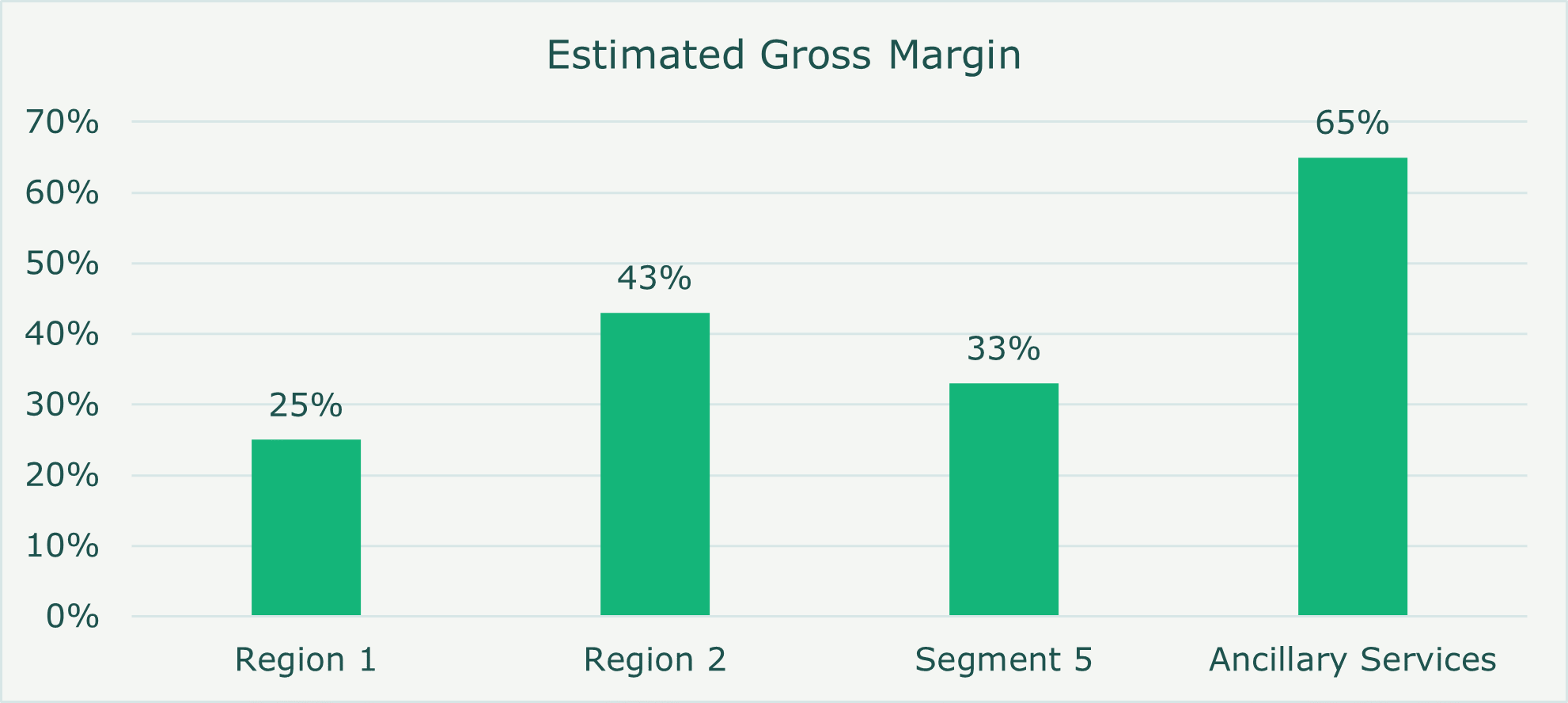
When gross margins were introduced into the analysis, the picture changed:
When converted to total profit, the answer changed immediately:
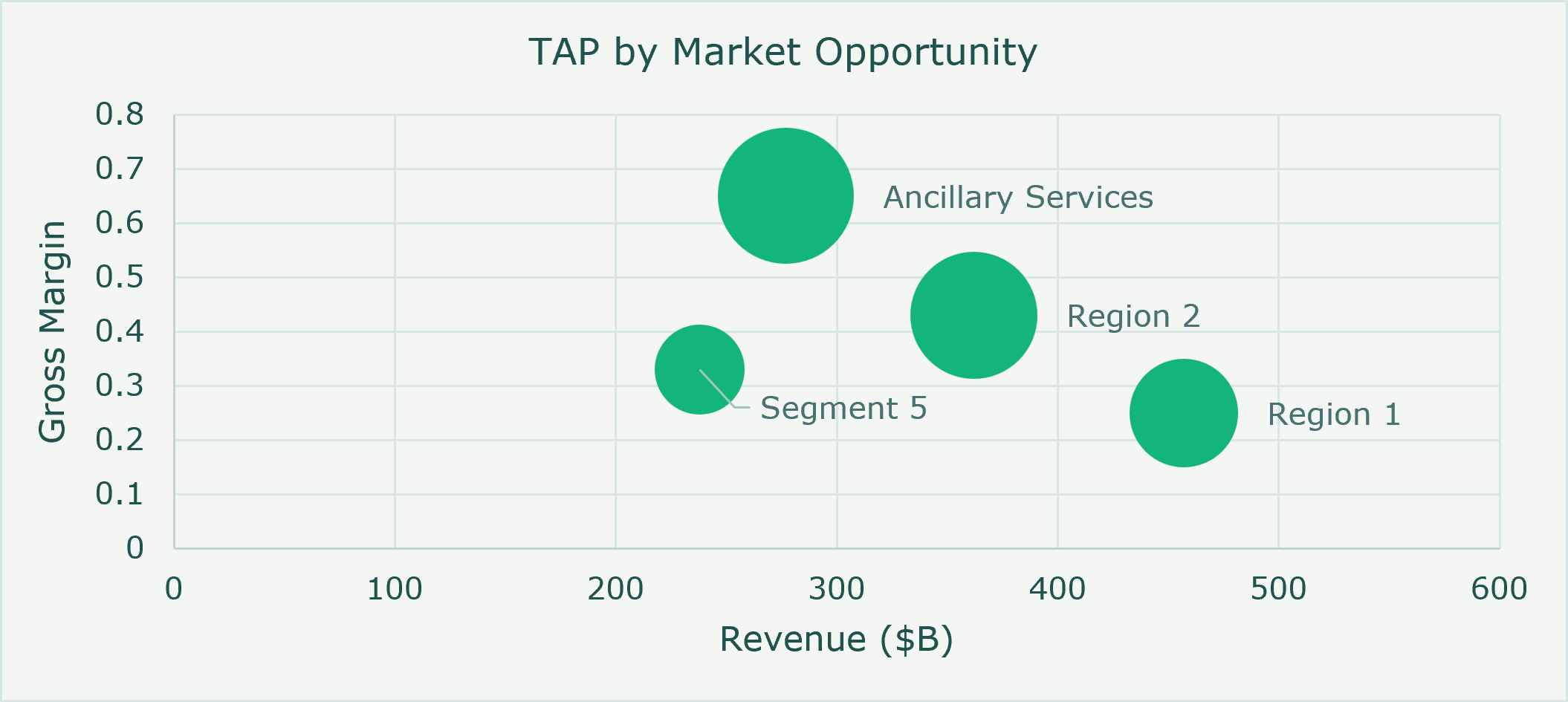
This insight fundamentally changed the company’s strategy. They shifted focus to ancillary services, building capabilities that increased customer loyalty and expanded margins.
The largest market was not the best opportunity.
TAP made that clear.
Traditional market sizing can mislead in several ways:
TAP introduces a critical dimension to market evaluation, value creation. It enables better decisions in areas that matter most:
By shifting the focus from revenue to profit, TAP helps companies avoid pursuing “busy” growth and instead prioritize high-value opportunities.
TAP does not require perfect data; it requires informed estimates. Gross margin insights can be developed through:
Once margin estimates are established, TAP can be calculated quickly and compared across segments.
TAM-SAM-SOM remains a useful framework. But on its own, it is incomplete.
Total Addressable Profit adds the dimension that matters most—profitability, and transforms market sizing from a theoretical exercise into a practical tool for decision-making. Revenue shows potential. Profit determines value.
Organizations that incorporate TAP into their analysis make better strategic choices, allocate capital more effectively, and build more valuable businesses.
-
Contact us to see how we can help your business today.
Never miss a beat. Get our latest insights in your inbox.